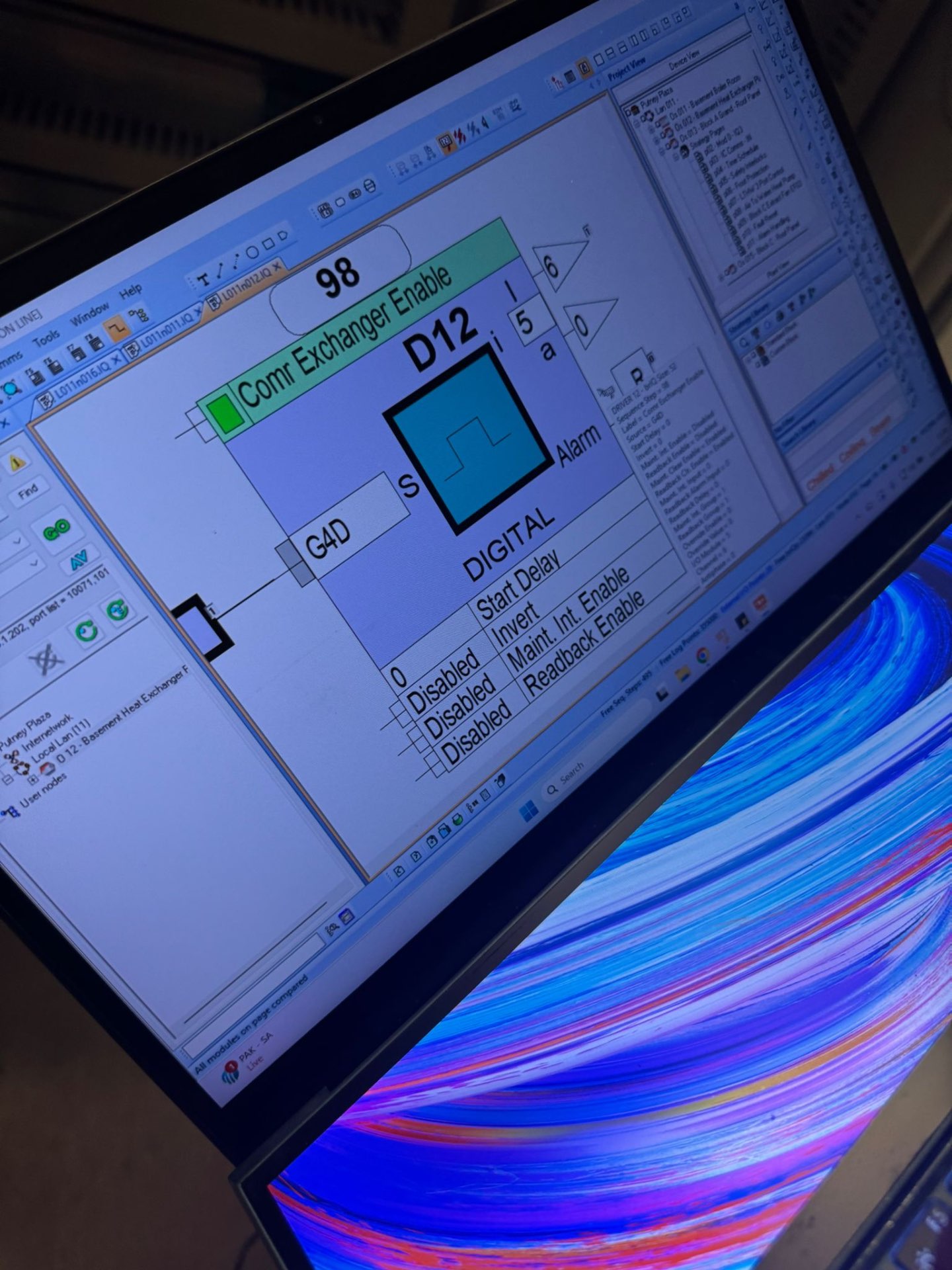

What is a Building Management System?
A Building Management System (BMS) — also called a Building Automation System (BAS) or Building Energy Management System (BEMS) — is the centralised control system that operates a commercial building's HVAC, lighting, metering and energy plant. It joins field sensors and actuators to programmable controllers and a head-end supervisor so a building can be run efficiently, comfortably and to compliance from a single platform.
In, BMS work is typically engineered to BSRIA BG 49 (commissioning), CIBSE Guide H (controls design) and BS EN 15232 (BAC energy class A–D). Done well, a modern BEMS will cut HVAC and lighting energy by 15–30%.
What does BMS stand for?
BMS stands for Building Management System. You'll also see it called BAS (Building Automation System) or BEMS (Building Energy Management System) — in the market the terms are used interchangeably.
What does BMS mean in HVAC?
In HVAC, the BMS is the system that sequences boilers, chillers, AHUs, fan coil units and ventilation — managing temperature, fresh-air, pressures and energy use through programmable controllers and a central supervisor.
How does a BMS work?
Field sensors send live data to controllers, which run the control strategy and command actuators, valves and VSDs. Data flows over BACnet, Modbus or KNX up to a head-end supervisor for graphics, alarms, schedules and reports.
What a BMS controls
Heating, cooling & ventilation
Boilers, chillers, AHUs, fan coil units, VRF/VRV, heat pumps and ventilation — sequenced for comfort and efficiency.
Energy & metering
Electrical, gas, water and heat metering with aM&T dashboards, Part L compliance and net-zero reporting.
Lighting & occupancy
DALI, KNX and wireless lighting tied to occupancy, daylight and tenant scheduling.
Plant rooms & utilities
CHP, calorifiers, pump sets, pressurisation, BMS-driven leak detection and tank-level monitoring.
How a BMS works — the 5 layers
- 1
Field layer
Sensors, actuators, valves, VSDs and meters across the plant — the eyes and hands of the BMS.
- 2
Controller layer
Trend IQ4, Tridium JACE, Siemens PXC, Schneider AS-P or Honeywell CIPer — running the control strategy in panels.
- 3
Network layer
BACnet/IP, BACnet MS/TP, Modbus and KNX traffic between controllers, meters and integrated systems.
- 4
Supervisor / head-end
Niagara N4, Trend 963, Desigo CC, EcoStruxure Building Operation — graphics, alarms, schedules and reporting.
- 5
Cloud & analytics
Optional cloud BMS, fault detection & diagnostics (FDD), benchmarking and remote engineering.
BMS services we deliver
Browse the eight service families covering every stage of a BMS lifecycle — from new-build installation to lifecycle optimisation.
Installation & Commissioning
Full BMS / BEMS installation, control panel design and commissioning for new-build and retrofit projects.
Maintenance & Support
Planned preventative maintenance, reactive call-outs, 24/7 monitoring and BMS lifecycle support.
HVAC Controls
Controls for AHUs, chillers, boilers, fan coil units and ventilation across commercial buildings.
Energy Management
BEMS, sub-metering, monitoring & targeting and optimisation strategies that reduce energy spend.
Smart Building & IoT
Cloud BMS, wireless controls, building analytics and predictive-maintenance platforms.
Systems Integration
BACnet, Modbus, KNX and Niagara 4 integration across multi-vendor estates.
Specialist Sectors
Data centre cooling, lighting controls, industrial automation and facilities energy management.
Consultancy & Project Management
BMS design, M&E controls consultancy, lifecycle planning and full project management.
BMS platforms we engineer
Open protocols & integration
Ready to talk about your BMS Site Survey?
Speak to a BMS engineer about your estate. We provide free site surveys, no-obligation proposals and lifecycle support across every major controls platform.
Vendor-independent · Trend · Tridium · Siemens · Schneider · Honeywell
Most-asked BMS topics
Building Management System FAQs
What is a BMS (Building Management System)?
+
A Building Management System (BMS) is the centralised control system that operates a commercial building's HVAC, lighting, metering and energy plant. It links field sensors and actuators to controllers and a head-end supervisor so the building runs efficiently, comfortably and to compliance.
What does BMS stand for in buildings?
+
BMS stands for Building Management System. It's also called a Building Automation System (BAS), Building Energy Management System (BEMS) or building controls. The terms are used interchangeably in the market.
What does BMS mean in HVAC?
+
In HVAC, the BMS is the system that sequences boilers, chillers, AHUs, FCUs and ventilation — controlling temperatures, fresh air, pressures and energy use through programmable controllers and a central supervisor.
How does a Building Management System work?
+
Field sensors send live data (temperature, pressure, CO₂, energy) to controllers, which run a control strategy and command actuators, valves and VSDs. The controllers report up to a supervisor (head-end) over BACnet, Modbus or KNX, where graphics, alarms, schedules and reports are managed.
What's the difference between a BMS and a BEMS?
+
A BMS focuses on operating the plant for comfort and safety. A BEMS (Building Energy Management System) extends a BMS with metering, sub-metering, analytics and optimisation to actively reduce energy consumption. Most modern systems are sold as BEMS today.
Which BMS platforms do you support?
+
We are vendor-independent: Trend (IQ3, IQ4, 963), Tridium Niagara (N4, JACE 8000), Siemens (Desigo, Apogee), Schneider (EcoStruxure, TAC) and Honeywell — plus BACnet, Modbus and KNX integration between them.
How much does a BMS cost ?
+
Indicative ranges: small office/AHU controls from £8k–£25k, mid-size building retrofit £25k–£120k, multi-building or multi-AHU campus £120k+. PPM contracts start at around £1.8k/year. Always confirmed against a free site survey and fixed written proposal.
How much energy can a BMS save?
+
Independent studies (Carbon Trust, BSRIA) and our own client data put well-tuned BMS/BEMS savings at 15–30% of HVAC and lighting energy spend. Quick wins from optimisation alone often pay back inside 12 months.
Which standards govern BMS work ?
+
BSRIA BG 49 (commissioning method), CIBSE Guide H (control systems design), BS EN 15232 (BAC energy class), BSRIA BG 6 (RIBA-stage deliverables), BS EN 61439 (control panels) and BS 7671 (electrical wiring).
What is a BMS engineer?
+
A BMS engineer designs, installs, programs, commissions and maintains the controls that run a building. See our dedicated /services/bms-engineer page for qualifications, accreditations and the role in detail.
Ready to talk about your Free BMS Consultation?
Speak to a BMS engineer about your estate. We provide free site surveys, no-obligation proposals and lifecycle support across every major controls platform.
Vendor-independent · Trend · Tridium · Siemens · Schneider · Honeywell